On display through January 31st
Michigan Union, Opera Lounge (first floor)
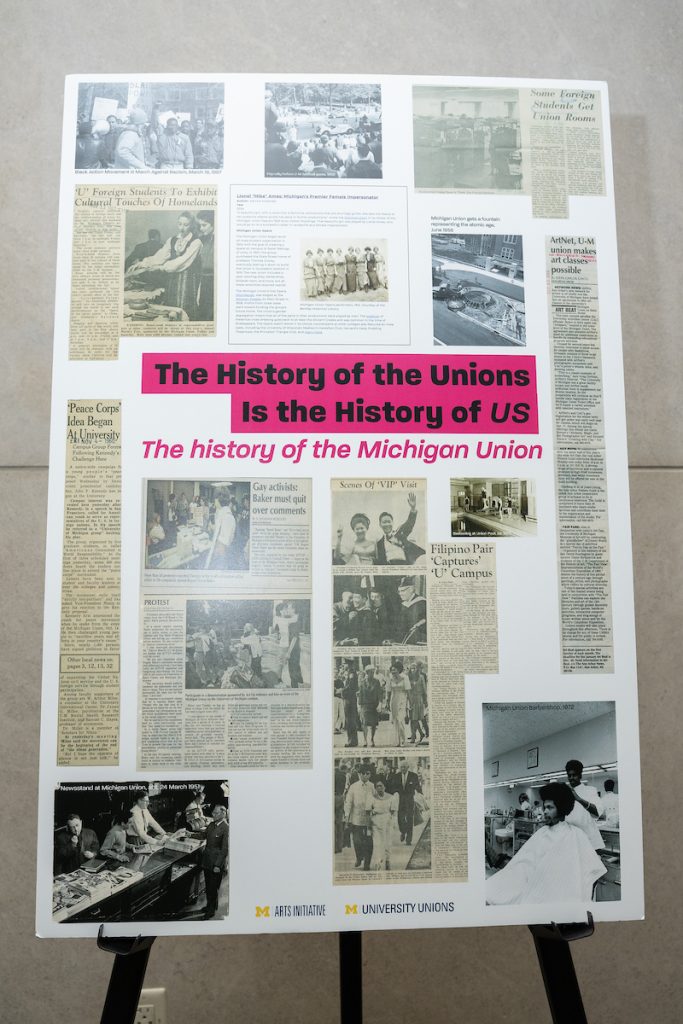
How do we imagine history? Though history is most often told through the written word, our understanding of the past is deeply visual. From textbook illustrations to our own internal world-building, we continually visualize the people and places that have shaped history. Yet, in this act of visualization, certain stories are inevitably left out. What is omitted, and how do these visual interpretations influence our collective memory?
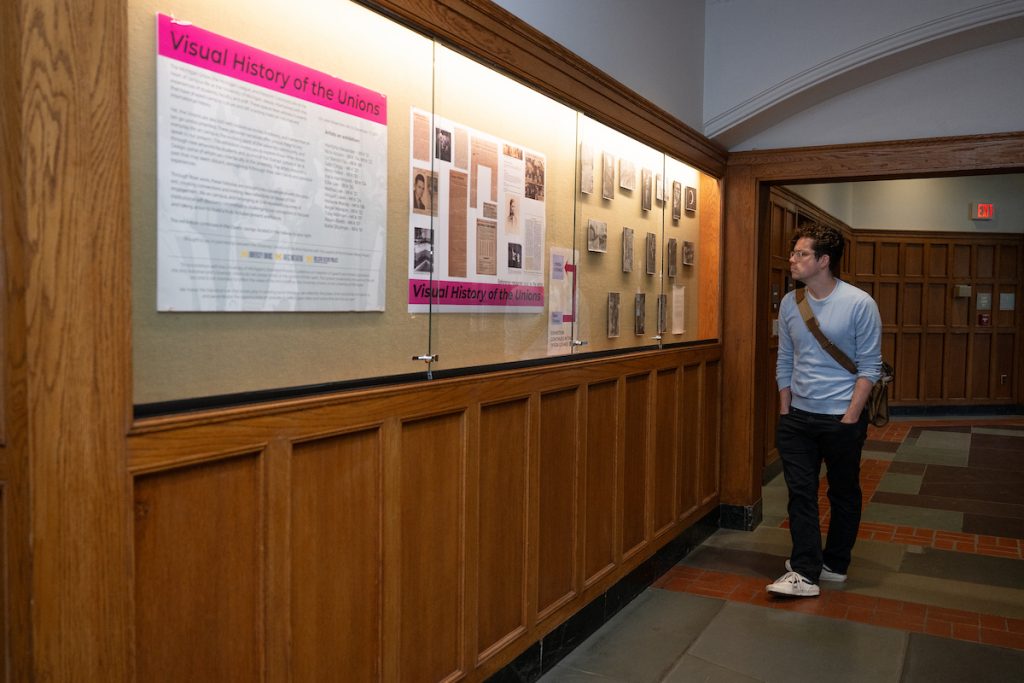
In conjunction with the Inclusive History Project, University Unions and the Arts Initiative have hosted alumni and current students of the Stamps School of Art & Design, representing graduating classes ranging from 1982 through 2026, to display University Unions’ history through original, creative works. By exploring the histories of two of the university’s most iconic buildings—the Michigan Union and the Michigan League—they seek out lesser-known stories that illuminate the contributions and struggles of individuals who have moved the U-M community forward.
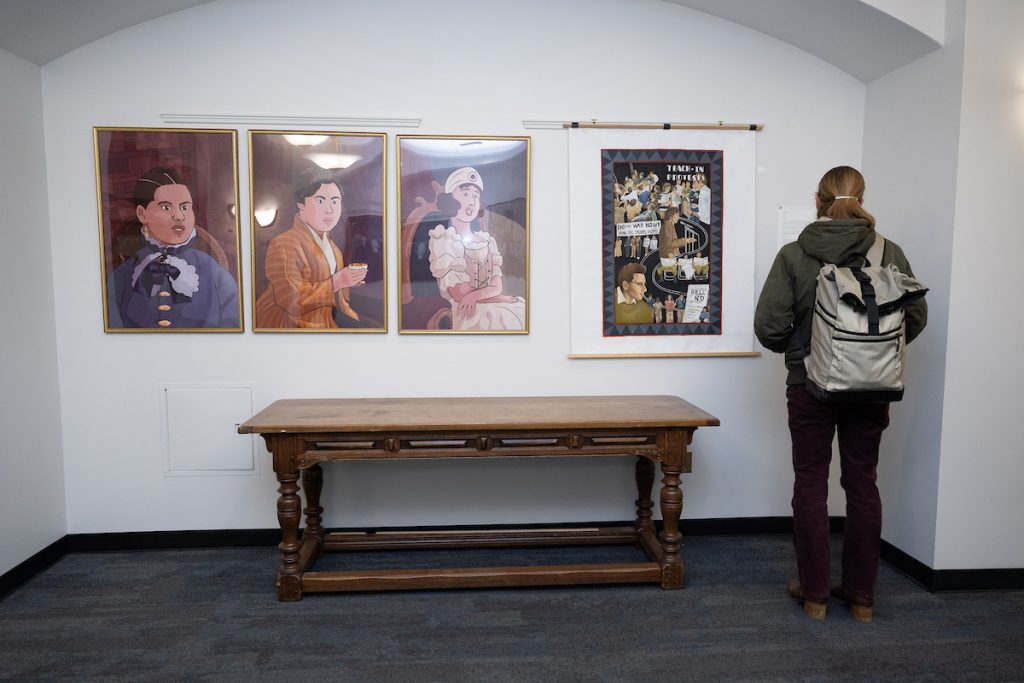
Widely regarded as the symbolic heart of campus, these spaces have long been integral as important centers for student identity, transformation, and activism. Some of the themes the artists depict include: the rich history of musical performances by female impersonators, access to the Union – built as a men’s club – by women, the experiences of Black students, and protest movements. Through critical and creative engagement with these histories, these artworks empower students to shape narratives that resonate both personally and collectively. The project is led by University Unions and the University of Michigan Arts Initiative, as part of its goal to encourage engagement with critical topics across the university through the arts and expand access to the arts across campus.
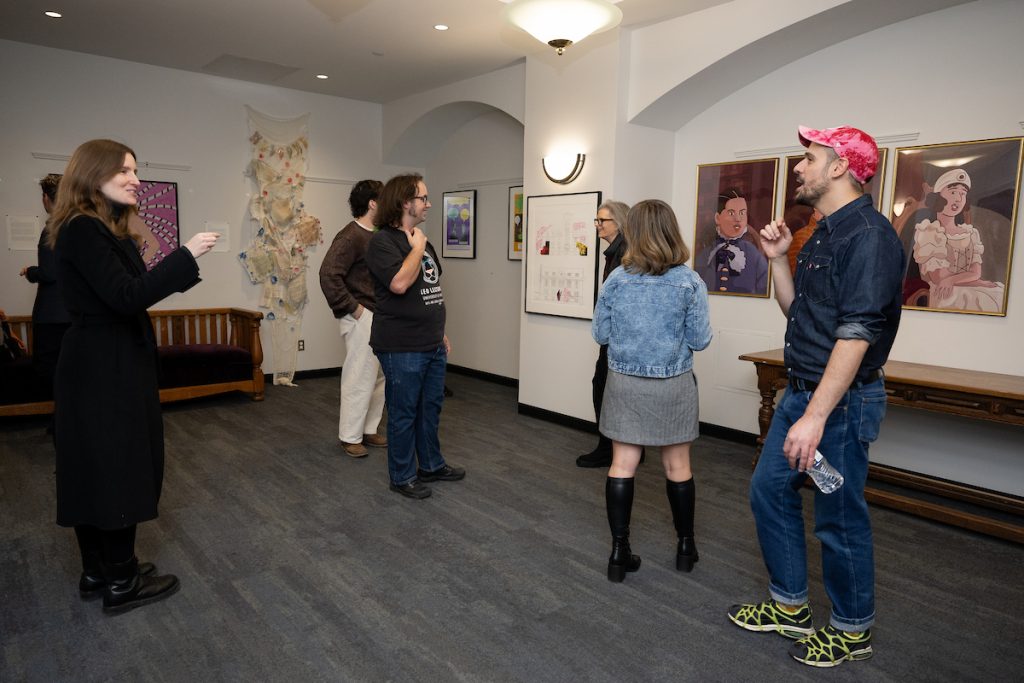
With their artworks, the artists invite viewers to consider how contemporary representations of the past can help enrich our collective identity. Here, art-making becomes a process of reflection where each creative decision—whether in subject, style, or medium—demands thoughtful engagement with history. Through this process, the artists bring new insights into the university’s past, highlighting the breadth of student-led initiatives that have helped foster a more inclusive and responsive campus community. The project is made possible through support by The Inclusive History Project, which supports projects that complement its mission to “document and share a comprehensive history of U-M that includes its record of inclusion and exclusion.”
Alison Rivett, Associate Director of the Arts Initiative, and fellow alum of the Stamps School, focuses her work on the ability of the arts to bring people together and believes in creating more opportunities for artists to show work and come together under a common endeavor. “Making art is a very in-depth way to engage with a topic and find a personal connection to it.” Because the Union and League are the heart of campus activity, this project aims to shed light on and honor student contributions to progress on campus. Through the artists’ perspectives and creative work, we are invited to imagine a more inclusive history—and, in turn, to collectively envision the future we aspire to create.
The new artwork is on display in the Michigan Union’s Opera Lounge (first floor) and adjacent hallway until January 31st.